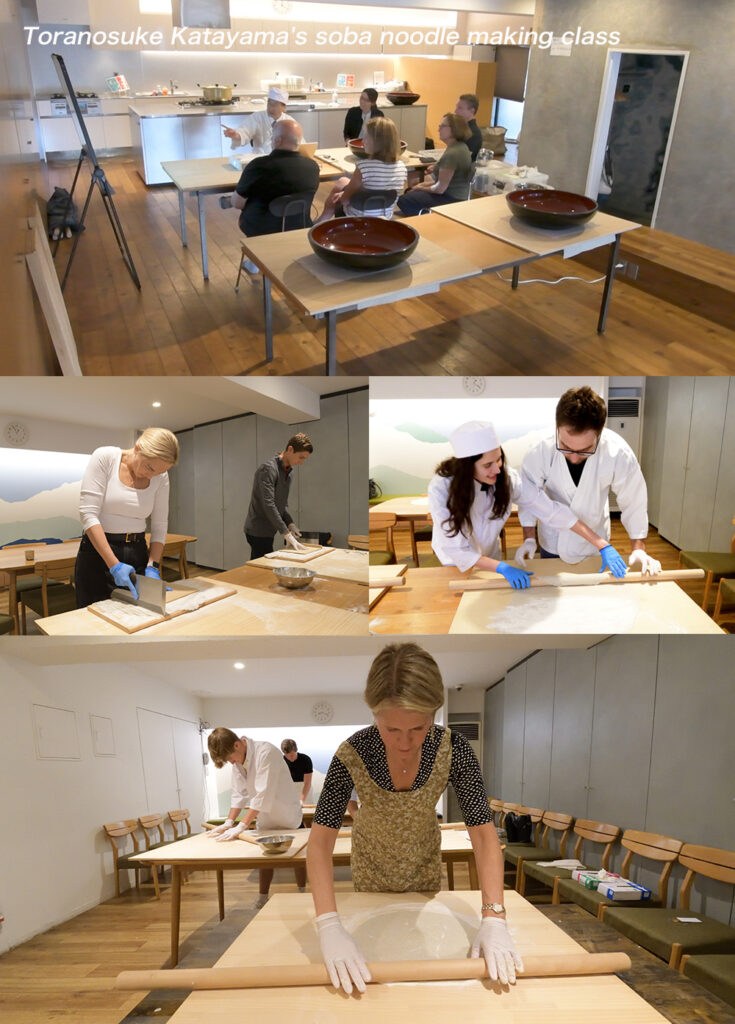
⬇︎Let’s make artistic soba. Toranosuke Katayama will teach you how to make authentic Japanese soba.Click here to visit the website for a detailed explanation.
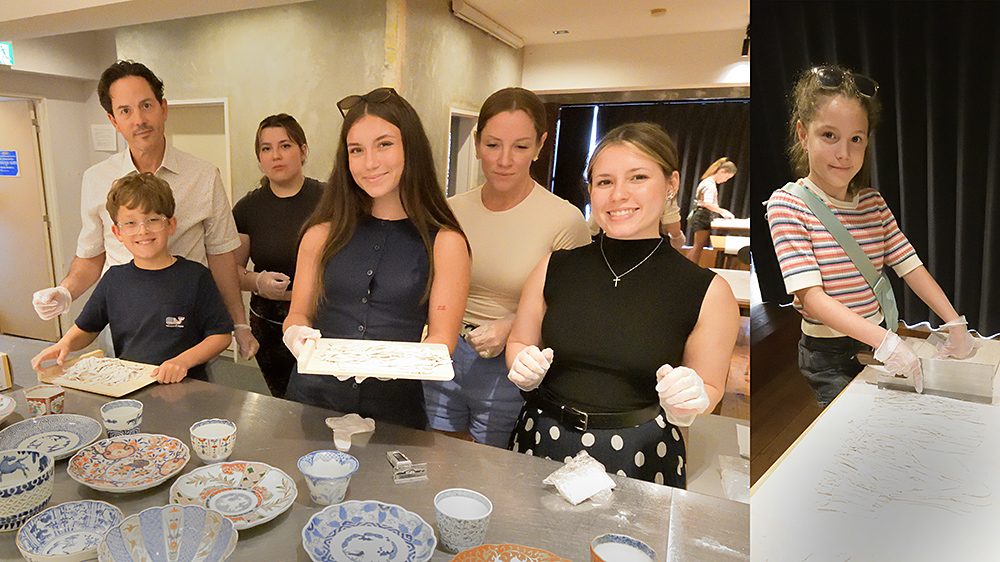
Soba as Art / Toranosuke Katayama
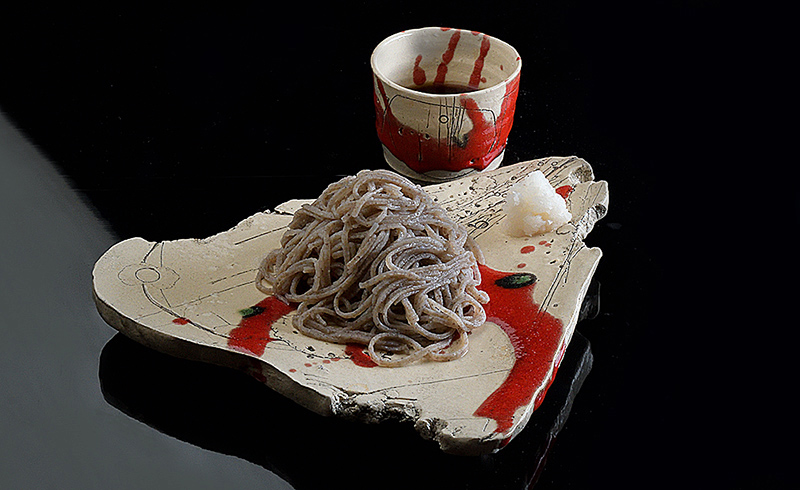
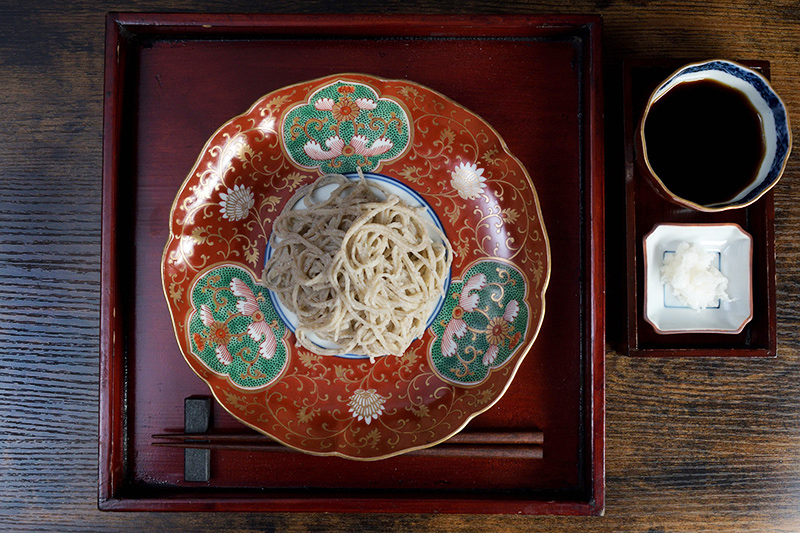
⬆︎ “Van Gogh’s Ni-Hachi Soba,” a form of artistic expression introduced by Toranosuke Katayama in 2022. Highly acclaimed as a masterpiece of artistic soba, it has been featured on television programs and elsewhere. The plate shown in this photo is the official serving dish. World-renowned ceramic artist Kazu Yamada fell in love with this soba and created a dish specifically suited for “Van Gogh’s Ni-Hachi Soba.” We serve this dish on a plate named “Kakyu Oribe Soba Plate,” so please take the time to appreciate the beauty of the dish itself. To find restaurants where you can enjoy this soba, please search for “Van Gogh’s Ni-Hachi Soba.”
There is a gentle expression in Japan: “putting your heart into it.”
When I make soba, I whisper these words to myself.
When I make soba with all my heart, I feel as though something invisible is being poured into the noodles from my fingertips and the palms of my hands.
In the past, soba wasn’t something people made just to eat themselves; it was a special treat served to honor loved ones.
When I make soba with all my heart, it becomes more and more delicious.
In this context, the phrase “making soba” does not simply refer to cutting the noodles with a knife.
Please understand it to mean every thoughtful detail—from selecting the raw buckwheat grains, to grinding the buckwheat flour with a stone mill, to the flavor of the soba dipping sauce, and even the choice of dishes and presentation when serving the soba—all aimed at bringing joy to those you hold dear.
Each of these seemingly small details—both before and after the actual “soba-making” process—is, in fact, a crucial key that determines the soba’s deliciousness.
I believe that soba made in this way becomes a “work of art” that truly expresses the maker’s thoughts and character.
Painting is an art form appreciated through sight.
Music is an art form appreciated through hearing.
And soba is an art form appreciated through taste—
and for the person making it,
I believe it is a “work of art” that expresses their innermost feelings.
So, how can one make such artistic soba—
soba that is both delicious and visually stunning?
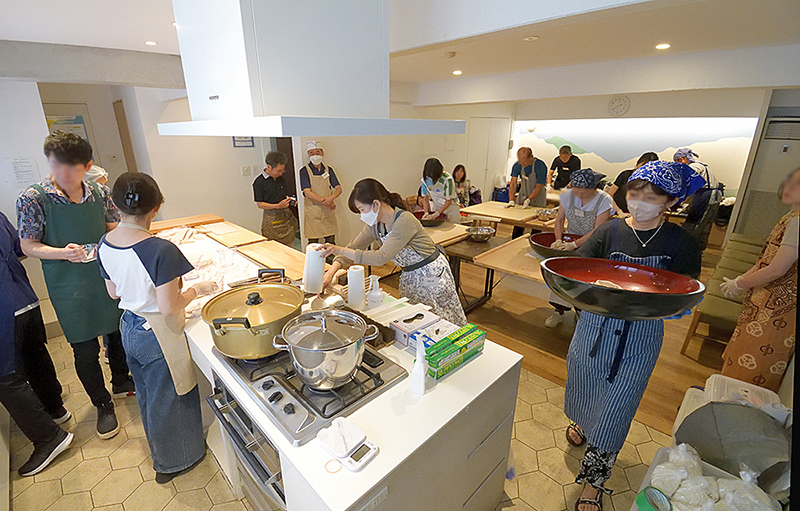
At the soba-making classes hosted by Toranosuke Katayama, we teach you how to make this “artistic soba.”
⬇︎If you’d like to make artistic soba, search for “Soba-Making Class: Experience 100% Buckwheat Soba in Tokyo” and visit the website of the same name. It’s a soba-making class run by Katayama. Here, we teach you a special technique for making soba.
[Making artistic soba allows you to experience the essence of Japanese culture]
There is an aesthetic to soba.
“If the noodles aren’t thin and connected in a long strand, it’s not soba,” or
“Soba should be eaten with broth applied only to the bottom third of the noodles,” or
“It’s considered ‘iki’ (stylish) not to linger at a soba shop—once you’ve finished eating, you should leave promptly.”
Soba enthusiasts each share their own insights like these.
These remarks are rooted in the aesthetic of “iki,” and can truly be seen as a manifestation of Japanese culture.
Soba embodies an aesthetic unique to Japan.
It’s rare to find another food that possesses such a distinct aesthetic.
Soba is a special food to which the Japanese have a remarkably strong emotional attachment.
Even today, aesthetics such as “Zen, iki, wabi, and sabi” flow at the very foundation of Japanese consciousness and behavior.
These aesthetics serve both as a driving force propelling the Japanese forward and as a brake that restrains their actions.
When people from other countries feel that the Japanese way of life is “somehow different from their own,” it is because they have not yet deeply understood these cultural concepts of “Zen, iki, wabi, and sabi.”
By experiencing artistic soba at Toranosuke Katayama’s soba-making class, you can gain insight into the nature of Japanese aesthetics.
Pursuing soba as an art form is, in essence, pursuing Japanese aesthetics.
When you succeed in making exquisite soba, the door to understanding what Japan is all about will swing wide open.
[“Soba” and “Zen” are closely intertwined]
Making soba as a magnificent work of art is similar to Zen meditation.
You clear your mind of distracting thoughts, enter a state of mindfulness, and concentrate wholeheartedly on making the soba.
It is crucial to physically sense the feeling of water and buckwheat flour blending into one, as well as the tactile feedback where the rolling pin meets the dough—ensuring the pin does not press down too hard on the soba.
How you control this process determines the deliciousness of the soba. This is the turning point that decides whether it becomes a work of art or not.
If, while making soba, you can experience the sensation of your body, the rolling pin, and the soba dough melting together into a single entity, that is close to the state of Zen.
At the moment you finish making the soba, the world may even look different.
Making soba at Katayama’s classroom offers a meditative effect similar to zazen, bringing inner peace. Soba-making is also an excellent health practice that can be called “moving meditation.”
The “Artistic Soba Experience” at Katayama’s classroom is not merely a Japanese cooking class; it is “the ultimate cultural retreat where you learn Japanese aesthetics and culture through all five senses.”
[Soba—a work of art—contains valuable nutrients essential for physical health!]
Soba—a delicious work of art—contains valuable trace elements that are difficult to obtain through a typical diet, as well as essential amino acids that the body cannot produce on its own.
This is something that simply cannot be found in any other work of art besides soba.
Making soba has beneficial effects on both the mind and body, and eating it helps protect your health.
Soba, as a form of art, is a mysterious and captivating work of art unlike anything that has come before.
Soba is a food that boasts an excellent nutritional balance, rivaling that of eggs—a so-called “complete food.”
Even in times when science was not yet advanced, the Japanese of old knew the health benefits of soba through experience.
That is why Japan has the tradition of “Toshikoshi Soba,” where families gather to eat soba together at the end of the year.
Soba improves bowel movements, and its trace elements—such as minerals—help regulate your physical condition.
To reap these benefits, it’s important to eat dark-colored soba—ground with a stone mill to include the husks—rather than the refined, white soba commonly consumed today.
Needless to say, in Katayama’s classes, students make traditional soba packed with the grain’s natural nutrients.
This is a recreation by Katayama of the soba eaten approximately 350 years ago.
Please try this rare soba—unavailable anywhere else—at least once to truly understand what soba is all about.
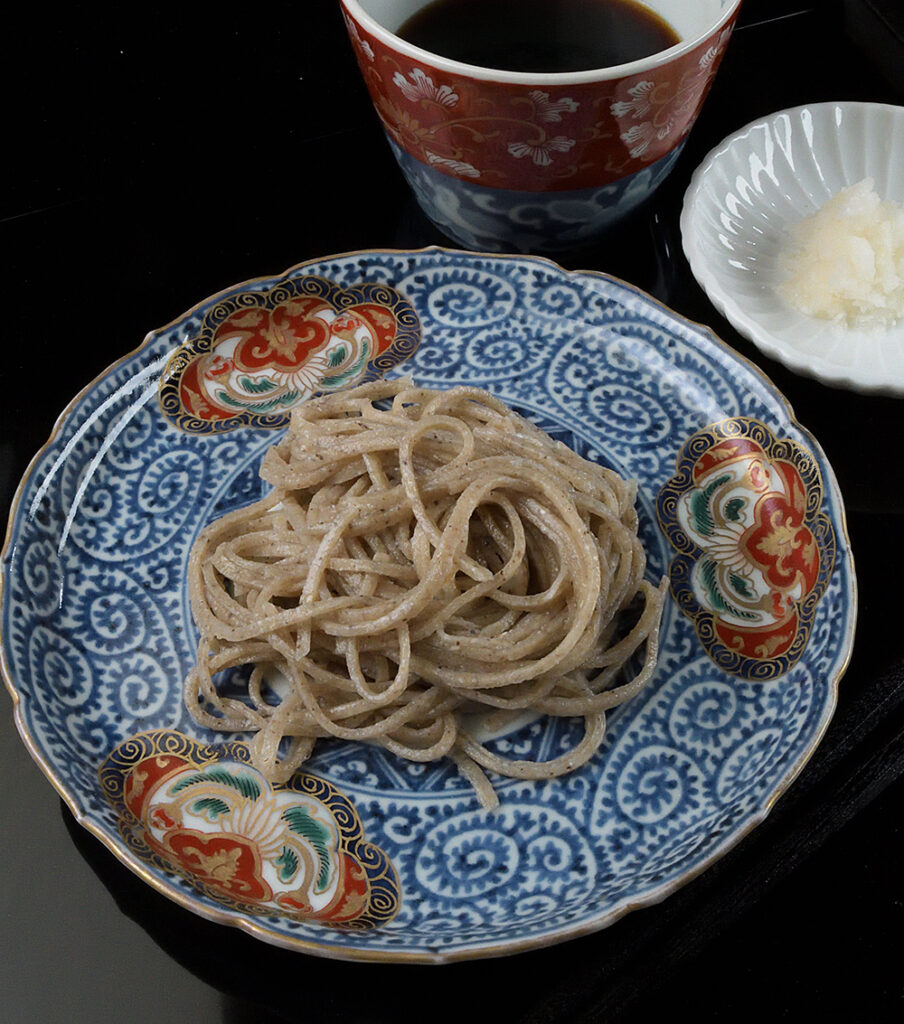
⬇︎ “Takokarakusa 100% Buckwheat Soba,” an artistic soba creation unveiled by Katayama in 2026 to coincide with the “Echizen Soba Biennale.”
⬇︎Toranosuke Katayama’s soba-making class, which teaches an artistic approach to the craft, is highly acclaimed.Click here to go to the registration website.